fspca logo

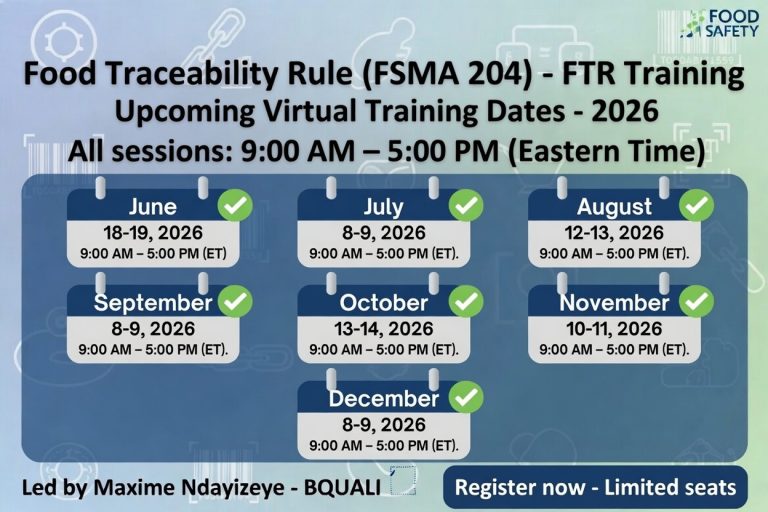
Upcoming Virtual Session:

May 7–8, 2026 | 9:00 AM – 5:00 PM ET
Live online training – Special Offer: $700 instead of $800. Use code FTR100 at checkout

Limited seats available. Secure your spot today and stay ahead of FDA requirements while protecting your business and consumers.

Course Description

The FDA’s Food Traceability Rule (FTR), officially known as the Final Rule on Requirements for Additional Traceability Records for Certain Foods, was issued under the Food Safety Modernization Act (FSMA).

This rule establishes additional recordkeeping requirements for companies that manufacture, process, pack, or hold foods listed on the Food Traceability List (FTL). The FTL covers a wide range of fresh produce, seafood, dairy products, and other high-risk foods and manufactured items.

Compliance with the FTR enables the food industry to more quickly identify and remove potentially contaminated products from the supply chain, helping to prevent foodborne illnesses and reduce the number of illnesses and deaths associated with contaminated food.

Developed by the Food Safety Preventive Controls Alliance (FSPCA), this course is specifically designed for food industry professionals whose operations must comply with the Food Traceability Rule. Participants will gain a solid understanding of the FTR requirements and learn practical approaches for developing and implementing effective food traceability systems.

Target Audience

The FSPCA Food Traceability Rule Training for the Food Industry is designed for firms that manufacture, process, pack, or hold foods listed on the FDA’s Food Traceability List (FTL) and are required to comply with the FSMA 204 Food Traceability Rule.

This includes domestic and foreign companies across the entire farm-to-table supply chain for foods produced for U.S. consumption. The curriculum is particularly relevant for:

  • Farms (produce, aquaculture, and egg producers)
  • Distributors and wholesalers
  • Food manufacturers and processors
  • Retail food establishments and grocery stores
  • Restaurants and foodservice operations

Individuals working in academia, government agencies, or as service providers to the food industry may also find this training highly beneficial.

Who Should Attend?

  • Food manufacturers, processors, packers, and holders of covered foods
  • Quality Assurance / Food Safety Managers
  • Supply Chain and Traceability Teams
  • Regulatory and Compliance Personnel
  • Anyone responsible for developing or maintaining a traceability plan
  • Supply Chain and Logistics Personnel
  • Preventive Controls Qualified Individuals (PCQIs)
  • IT/Data Systems Managers (working with traceability software)
  • Operations Managers
  • Growers, Packers, and Importers handling FTL foods

What Skills Can Participants Expect to Learn?

Attendees of this FSMA 204 Traceability Rule training will gain practical, actionable knowledge to successfully comply with the FDA’s Food Traceability requirements. You will learn how to:

  • Determine whether your company, products, or supply chain activities are subject to the FSMA 204 rule or specific customer traceability requirements
  • Understand the FDA’s Food Traceability List (FTL) and its regulatory impact on your operations
  • Identify, define, and properly document Key Data Elements (KDEs) for each Critical Tracking Event (CTE) in your facility
  • Develop, implement, and maintain a compliant Traceability Plan, including designating a point of contact, ensuring records accessibility, and accurately describing products
  • Seamlessly integrate traceability requirements into your existing food safety management systems
  • Prepare effectively for audits and FDA inspections by maintaining accurate and readily accessible traceability records
  • Leverage digital tools and technologies to streamline and improve your traceability workflows

Schedule Your Class Today

Don’t wait — secure your seat in this valuable training now for two important reasons:

  1. Stay Ahead of the Deadline: This course will equip you with the knowledge and tools needed to meet the FDA’s enhanced recordkeeping requirements well before the compliance date of July 20, 2028.
  2. Be Proactive, Not Reactive: Building a robust traceability system enables faster, more accurate tracebacks during recalls or investigations — reducing risk, protecting public health, and safeguarding your business.